PYUSD Wallet Introduction
PYUSD is a stablecoin issued by PayPal, created to combine the familiarity of digital payments with the flexibility of blockchain technology. To store and use PYUSD, you need a cryptocurrency wallet. A PYUSD wallet gives you access to your funds and allows you to send, receive, and manage digital assets securely.
Unlike many cryptocurrencies that experience significant price fluctuations, PYUSD maintains a stable value of 1 USD per token. You might want to try cryptocurrency for the first time or look for a dedicated way to manage PayPal USD. Knowing how PYUSD wallets and overall cryptocurrency storage work is the basis of controlling your assets.
What is PayPal USD (PYUSD)?
PYUSD is a stablecoin launched by PayPal in August 2023 as a digital version of the U.S. dollar that can move across blockchain networks. A stablecoin's goal is to make sure that 1 token equals 1 US dollar.
When other cryptocurrencies are highly volatile with their prices changing constantly, regulated by supply and demand, the PayPal USD token is backed by cash equivalents, short-term U.S. Treasuries, and dollar deposits. Reserve management is handled by Paxos Trust Company, a regulated financial institution that issues and manages the asset. All the decisions about the asset are Paxos's responsibility.
For many users, PYUSD is an introduction to blockchain payments. It combines PayPal's familiar brand with the crypto infrastructure. Every user, including newbies, can get exposure to blockchain technology without the price swings usually associated with digital assets and learn their way further.
As for technologies, PYUSD operates as an ERC-20 token on the Ethereum blockchain. This means you can store it in compatible cryptocurrency wallets, transfer PYUSD between users, and use the decentralized applications that support Ethereum-based assets.
Securing Your PYUSD Wallet
The most important elements of PYUSD wallet protection are private keys and recovery phrases. Private keys are the credentials that prove ownership of your PYUSD and authorize transactions. Those keys control access to your funds, while the backup phrase serves as the recovery method if the device with your cryptocurrency wallet is gone, malfunctioning, or replaced. All the security practices are about protecting those credentials as hard as the money itself.
Essential Security Practices
- Write down your recovery phrase and store it offline.
- Never share private keys with anyone.
- Use strong, unique passwords.
- Enable multi-factor authentication whenever available.
- Keep wallet software updated.
- Verify wallet websites before signing in.
- Avoid suspicious links and unknown downloads.
- Create secure backups of recovery information.
- Review transaction details before approval.
A hardware wallet is the type of PYUSD wallet that adds a layer of offline protection to your assets. This minimizes exposure to malware, phishing attacks, and other online threats. This form of storage is called "cold storage" and is great for long-term holdings.
PYUSD Wallet Security Checklist
Before storing significant amounts of PayPal USD, confirm that:
- Your recovery phrase is backed up offline.
- Your device uses a secure password or biometric lock.
- Multi-factor authentication is enabled.
- Wallet software is up to date.
- You understand how wallet recovery works.
- You have tested access to your backup information.
How PYUSD Differs From Other Stablecoins
PYUSD enters a market already dominated by established stablecoins such as USDC, USDT, and DAI. All of these assets are expected to maintain a stable value. It looks like there is nothing to distinguish them—they just compete with each other. But looking deeper, all the stablecoins have their own issuer, backing, blockchain support, and integrations.
One of PYUSD's key characteristics is its connection to PayPal. PYUSD is literally issued by PayPal. While USDC and Tether were built primarily for cryptocurrency markets, PYUSD benefits from direct integration with one of the most recognizable payment companies in the world. The relationship of the digital dollar with traditional currency becomes clearer.
| Stablecoin |
Issuer |
Backing |
Blockchain Support |
Ecosystem Integration |
| PYUSD |
PayPal / Paxos |
USD reserves and Treasuries |
Ethereum |
PayPal ecosystem |
| USDC |
Circle |
USD reserves and Treasuries |
Multiple networks |
Broad DeFi and exchange support |
| USDT |
Tether |
Reserve-backed |
Multiple networks |
Global exchange liquidity |
| DAI |
Sky Ecosystem |
Crypto-collateralized |
Ethereum ecosystem |
DeFi-focused |
For users already familiar with PayPal services, PYUSD wallet is a straightforward entry point into blockchain-based payments while retaining the stability expected from a dollar-backed asset.
Types of PYUSD Wallets Available
PYUSD can be stored in any cryptocurrency wallet that supports ERC-20 assets. By "storing PYUSD," it means storing credentials that authorize PYUSD transactions (private keys). The actual coins remain online. If the token is built on a particular blockchain, it needs a blockchain-compatible wallet.
The right choice depends on how often you use the PayPal USD token, your security preferences, and the goals you want to meet. Some users prioritize accessibility and quick transactions of web wallets, even when they're not the safest option. Others focus on long-term storage and maximum protection offered by cold hardware wallets. Most of the active users prefer a middle ground: non-custodial wallets supporting multiple formats with extra security practices on top. Understanding the main wallet categories helps narrow the options.
Factors to Keep in Mind When Choosing a PYUSD Wallet
- ERC-20 compatibility (required)
- Mobile and/or desktop availability
- Non-custodial private key control
- Ease of use (always important, especially if you are just starting your crypto journey)
- Support for additional cryptocurrencies
- Built-in exchange or purchase features
- Hardware wallet integration (optional, but good to know if you're planning to hold your assets for a long period of time)
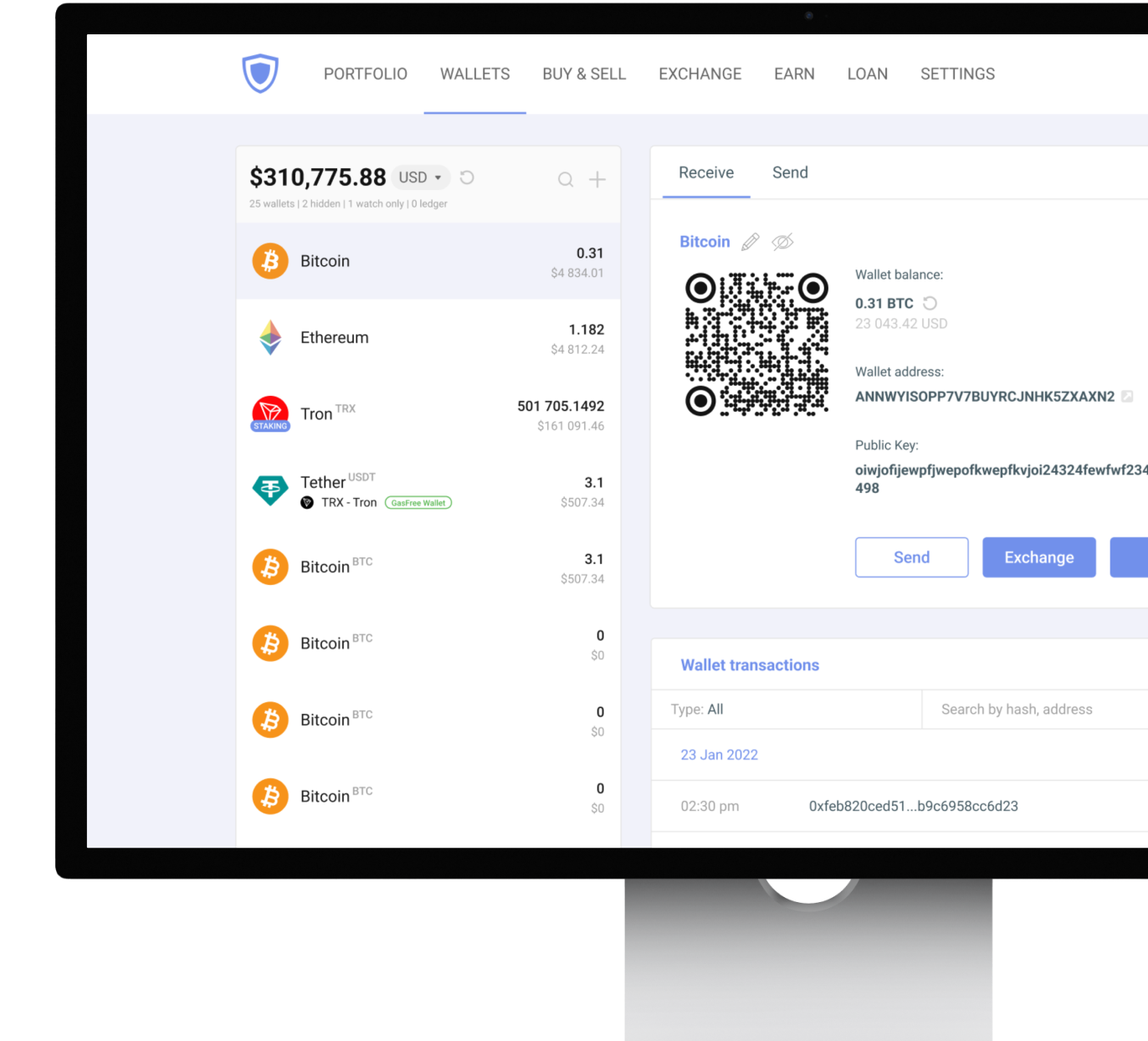
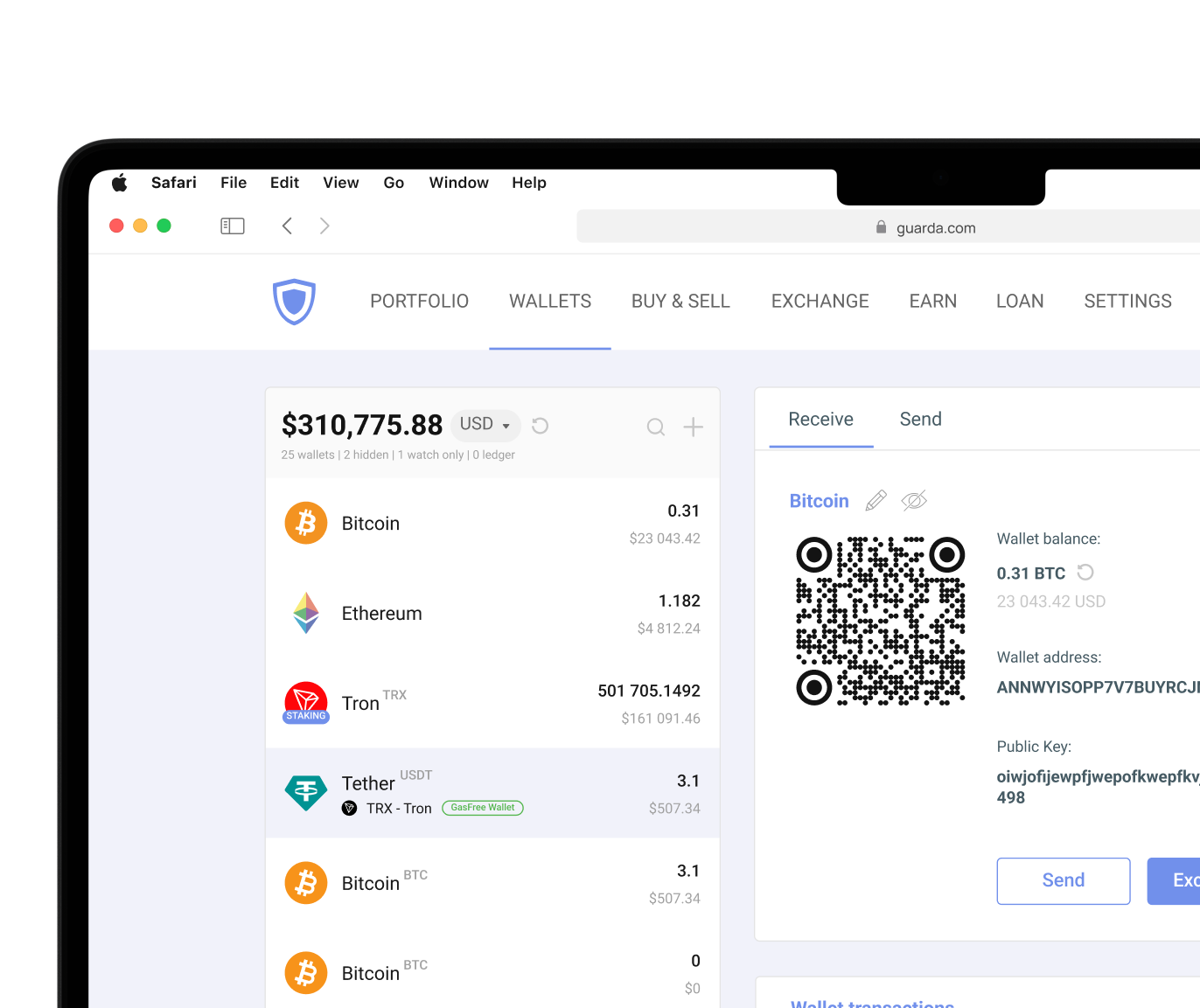
Guarda Wallet is a non-custodial wallet that supports PYUSD across desktop, mobile, and browser formats. You can access the same ecosystem across multiple devices while still having full control over their private keys.
| Wallet Feature |
Security |
Convenience |
Flexibility |
Recovery |
| Hardware Wallet |
★★★★★ |
★★☆☆☆ |
★★★☆☆ |
★★★★★ |
| Software Wallet |
★★★★☆ |
★★★★★ |
★★★★★ |
★★★★☆ |
| Mobile Wallet |
★★★★☆ |
★★★★★ |
★★★★☆ |
★★★★☆ |
| Web Wallet |
★★★☆☆ |
★★★★★ |
★★★★☆ |
★★★☆☆ |
Hardware vs. Software Wallets for PYUSD
Most PYUSD users eventually choose between two categories: hardware wallets and software wallets. Both can store PayPal USD, but they are designed for different priorities.
Software wallets focus on convenience. They run on mobile phones, desktop computers, and browser extensions. Because they remain connected to the internet, they make it easier to send payments, manage assets, and interact with cryptocurrency services very fast. Usually they are described by the term "hot." For active users, a non-custodial software wallet often provides the most practical balance between convenience and security.
Hardware wallets approach security differently. Private keys remain inside a dedicated offline device, and transactions must be approved physically. This extra step reduces exposure to malware, phishing attempts, and other online threats.
A common misconception is that non-custodial automatically means cold storage, but it is not true. Many software wallets are non-custodial while remaining internet-connected. Hardware wallets and cold storage are separate concepts focused specifically on offline key protection.
The best setup for many users is to use both. A non-custodial software wallet handles everyday PYUSD activity, while a hardware wallet secures long-term holdings. Ledger devices, for example, can integrate with Guarda Wallet, combining software convenience with hardware-level protection.
Available Networks for PYUSD
PYUSD currently operates as an ERC-20 token on the Ethereum blockchain. Every PYUSD transfer is processed through Ethereum's infrastructure, and wallet compatibility depends on support for Ethereum-based assets.
Because PYUSD uses the Ethereum network, transactions require gas fees paid in ETH. The Ethereum network validates transfers, records balances, and maintains the blockchain that supports PYUSD ownership. Validators on the Ethereum network process and confirm PYUSD transactions. Network conditions can influence transaction costs. During periods of high activity, Ethereum fees may increase. Before sending funds, always confirm that both the wallet and receiving address support Ethereum-based PYUSD transactions.
The broader blockchain ecosystem continues to develop scaling solutions that aim to improve transaction efficiency. Layer-2 networks have already reduced costs for many Ethereum-based assets, and future PYUSD expansion could increase network options over time.
Cryptocurrency involves risk. This article is for informational purposes only and does not constitute financial advice. Always conduct your own research before using any wallet or investing in digital assets.




 Google
Chrome
Google
Chrome Brave
Brave