Best Exodus Alternatives for Advanced Multi-Chain Features
Exodus has one of the most polished interfaces among software crypto wallets. Its beginner-friendly design, visual portfolio tracking, and real-time charts make it easy to see what you own and how your portfolio is performing. For users who want crypto management to feel simple and approachable, that is a real advantage.
But a beautiful interface can only take you so far if the wallet doesn't support the asset you want to hold or the activity you want to perform. Exodus supports fewer total assets than some broader multi-chain wallets and has also dropped support for certain cryptocurrencies over time, including Monero (XMR).
That gives users a different reason to look for an Exodus alternative. You may need support for a less common coin, broader multi-chain coverage, more Web3 access, dedicated hardware integration, or crypto-backed borrowing. In those cases, a more utilitarian wallet can make more sense than the most polished one.
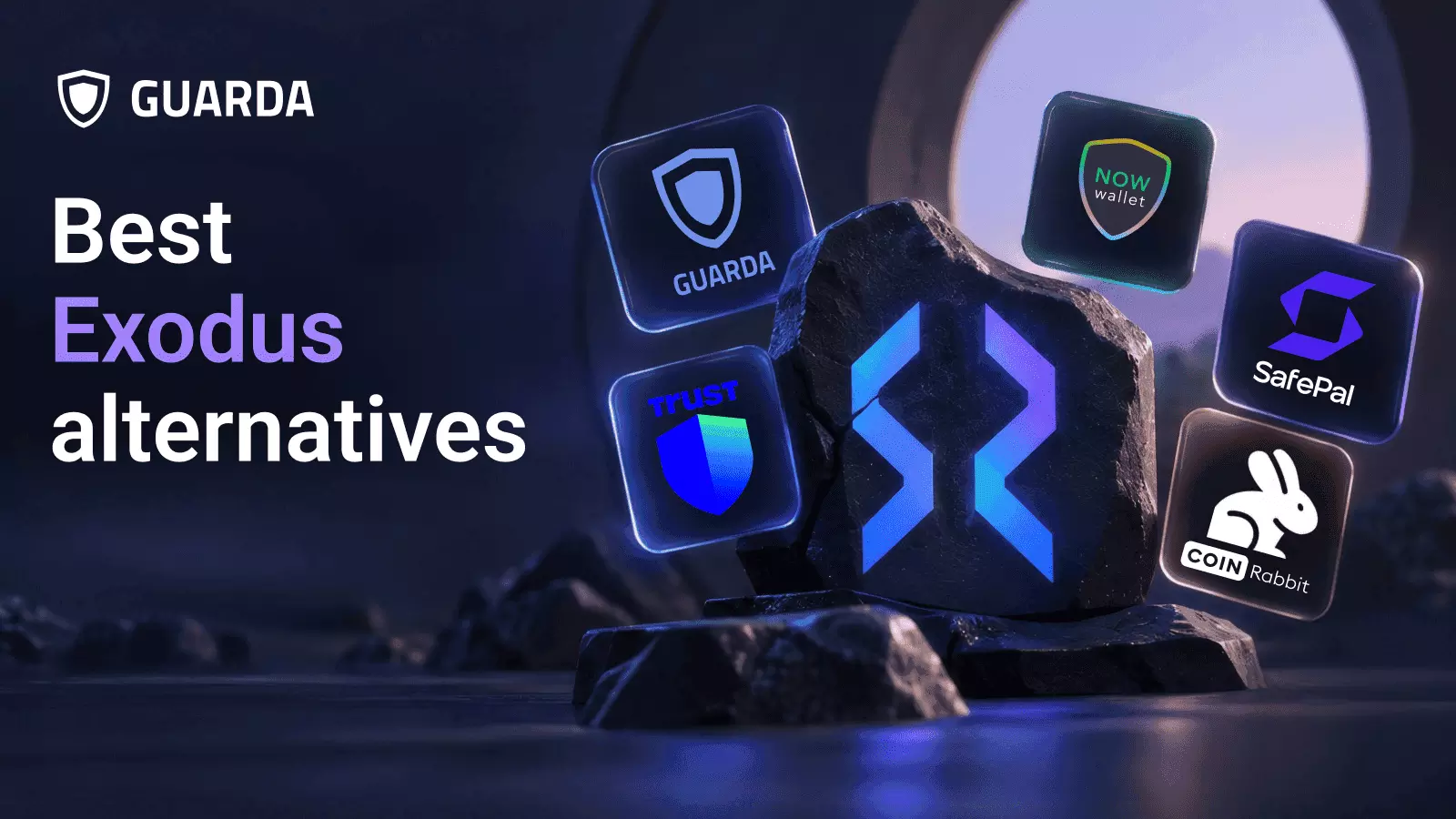
Here are five Exodus alternatives built around those different priorities.
| Wallet | Best for | Platforms | Why it’s an Exodus alternative |
|---|---|---|---|
| Guarda Wallet | Broad & rare asset support | Mobile, Web, Desktop, Extension | A more utilitarian multi-chain option with 1M+ assets and broader support for users whose portfolios go beyond mainstream coins. |
| Trust Wallet | Broad mobile Web3 access | Mobile, Extension | A mobile-first alternative for users who prioritize token coverage and dApp access. |
| NOW Wallet | Multi-chain swaps & less common assets | Mobile, Web | A straightforward option with 70+ blockchains, 1,500+ tokens, and support for manually adding compatible EVM tokens. |
| SafePal | Software + hardware wallet ecosystem | Mobile, Extension | A practical alternative for users who want broad blockchain access and dedicated hardware wallets in the same ecosystem. |
| CoinRabbit Wallet | Crypto-backed loans & managed crypto | Mobile | A service-focused alternative for users who prioritize borrowing and crypto management over a traditional portfolio interface. |
1. Guarda Wallet
Exodus puts considerable attention into how a crypto portfolio looks and feels. Guarda takes a more utilitarian approach. Guarda is a non-custodial crypto wallet supporting more than 70 blockchains and over 1 million assets. That breadth becomes particularly relevant when your portfolio starts moving beyond widely supported assets like Bitcoin, Ethereum, and stablecoins. Monero provides a good example. Exodus discontinued support for XMR, which means Monero holders need another wallet for that part of their portfolio. Guarda supports XMR alongside its native features, plus a much broader catalog of coins and tokens. That means users are less likely to rebuild their wallet setup simply because they add a less common asset.
The platform coverage is similar between the two. Guarda is available on Mobile, Web, Browser Extension, and Desktop, with native applications for Windows, macOS, and Linux. Users who like managing crypto on a computer therefore don't have to give up desktop access when moving away from Exodus. Guarda also includes swaps, fiat purchases, staking on 14 networks, crypto-backed loans, Ledger and ERA integrations, and 24/7 human support.
The trade-off is mostly about priorities. If you want an especially polished portfolio interface, Exodus has a strong case. If you care more about the number of assets, networks, platforms, and crypto activities you can access without changing wallets over time, Guarda takes the cake.
2. Trust Wallet
Trust Wallet makes sense as an Exodus alternative for users whose crypto activity has become increasingly mobile and Web3-oriented. The biggest change is the center of gravity. Exodus gives users a polished experience that works particularly well for viewing and managing holdings. Trust Wallet puts mobile crypto and access to decentralized applications much closer to the center of the experience.
Users can hold and exchange assets, stake supported cryptocurrencies, manage NFTs, and connect to dApps from the wallet. Its browser extension gives users another route into Web3 from a computer. That makes Trust Wallet particularly relevant when your wallet becomes something you regularly connect to decentralized applications.
Trust Wallet’s trade-off is platform coverage. Users who specifically like having a native desktop application may find Exodus more suitable. But if most of your crypto activity already happens on your phone and inside Web3, Trust Wallet is a natural alternative.
3. NOW Wallet
NOW Wallet takes another utilitarian route. Instead of competing with Exodus on portfolio presentation, it focuses heavily on holding and exchanging assets across many networks. The wallet supports more than 70 blockchains and over 1,500 tokens. Users can also manually add supported EVM tokens, which can be useful when a token doesn't appear in the wallet's default list.
Its connection to ChangeNOW puts swaps at the center of the experience. That makes NOW Wallet most practical for someone whose routine typically consists of receiving crypto, holding it, and exchanging one asset for another.
Staking is available for seven assets: SOL, TRX, BNB, NOW, ADA, XTZ, and ATOM. The selection isn't particularly broad, but users who already hold one of those assets may not need more.
NOW Wallet, therefore, makes more sense when practical multi-chain asset management and swaps matter more than seeing your portfolio presented beautifully.
4. SafePal
SafePal becomes interesting when your reason for leaving Exodus has less to do with software features and more to do with how you want to store your crypto. It combines a software wallet with its own hardware-wallet ecosystem. Users can manage crypto through the mobile app and browser extension while moving assets they want to protect more carefully onto dedicated SafePal hardware devices.
That combination creates a different workflow from a software-only setup. You can keep convenient access to Web3 and everyday transactions while using hardware for assets you don't need to move as frequently. SafePal also supports a broad selection of blockchain networks, making it suitable for portfolios that extend well beyond a handful of major cryptocurrencies. If your portfolio has grown to the point where you want software and hardware storage to work together, SafePal solves a more specific problem.
5. CoinRabbit Wallet
CoinRabbit is the most different Exodus alternative on this list because it approaches crypto from the service side rather than trying to reproduce the traditional self-custodial wallet experience. The platform focuses on crypto-backed loans and managed crypto services. Users can use supported assets as collateral to access liquidity instead of selling them, while CoinRabbit handles assets through its own custody infrastructure and cold storage.
That also creates the compromise: Exodus is self-custodial, while CoinRabbit uses a custodial model. If controlling your own private keys is a requirement, Guarda, Trust Wallet, NOW Wallet, or SafePal will fit that requirement better. But not everyone looking for an Exodus alternative is searching for another version of Exodus. Some users reach a point where they want their crypto to do something beyond sitting in a portfolio. For those users, CoinRabbit puts less emphasis on portfolio visualization and direct key ownership and more emphasis on borrowing and managed crypto services.
Which Exodus Alternative Should You Choose?
Exodus sets a high bar for interface design. If your main priorities are simplicity, portfolio visualization, and an approachable way to manage mainstream crypto, there may be little reason to leave it.
The alternatives become more interesting when your requirements get more specific.
Trust Wallet makes sense when mobile Web3 becomes a bigger part of your activity. NOW Wallet keeps multi-chain holding and swaps relatively simple. SafePal stands out when you want software and hardware wallets within one ecosystem. CoinRabbit takes a different route entirely, focusing on borrowing and managed crypto services.
Guarda is the alternative for users whose problem is coverage. Maybe you added a coin that Exodus doesn't support. Maybe you hold Monero. Maybe your portfolio has expanded across enough networks that support matters more than interface polish. Or maybe you simply want one self-custodial wallet that you can use from mobile, web, browser extension, and native desktop applications.
Exodus shows that a crypto wallet can be beautiful and beginner-friendly. But as your portfolio becomes more unusual, sometimes the best wallet isn't the prettiest one. It's the one that actually supports what you want to do.