Frequently Asked Questions
🔹 What is Solana?
A fast, low-cost blockchain that supports smart contracts, NFTs, and decentralized apps.
🔹 What is SOL?
SOL is the native cryptocurrency of the Solana network. It’s used to pay transaction fees and power applications.
🔹 How much is 1 Solana?
The price changes based on market demand. You can check the Solana price live in your Guarda Wallet or on popular exchanges.
🔹 How to buy Solana?
With Guarda Wallet, you can buy SOL directly using fiat (like USD or EUR) or by swapping other cryptocurrencies.
🔹 How to pay for DexScreener Solana?
Just load your wallet with SOL. Most apps on Solana accept SOL for gas fees and services.
🔹 Is Solana a good investment?
We can’t offer investment advice, but we can say this: Solana’s speed, low costs, and growing user base make it a compelling platform for utility and adoption. Always do your own research.
Stay turned with the latest news and updates by joining us on Twitter.
— @GuardaWallet
Solana is a high-performance blockchain designed for speed, scalability, and low transaction costs. Unlike older blockchains that often suffer from network congestion and high fees (like Ethereum), Solana was built to handle thousands of transactions per second while keeping fees under a cent.
At the heart of Solana is its unique consensus mechanism called Proof of History (PoH). While that may sound technical, here’s what it means in practice: instead of every node trying to validate transactions one at a time, Solana organizes them chronologically, like a timestamped diary. This method allows the network to process more data, faster.
So, when you use Solana to send coins, play a game, or buy something, the network confirms it almost instantly—without burning a hole in your pocket.
Meet the Minds Behind Solana
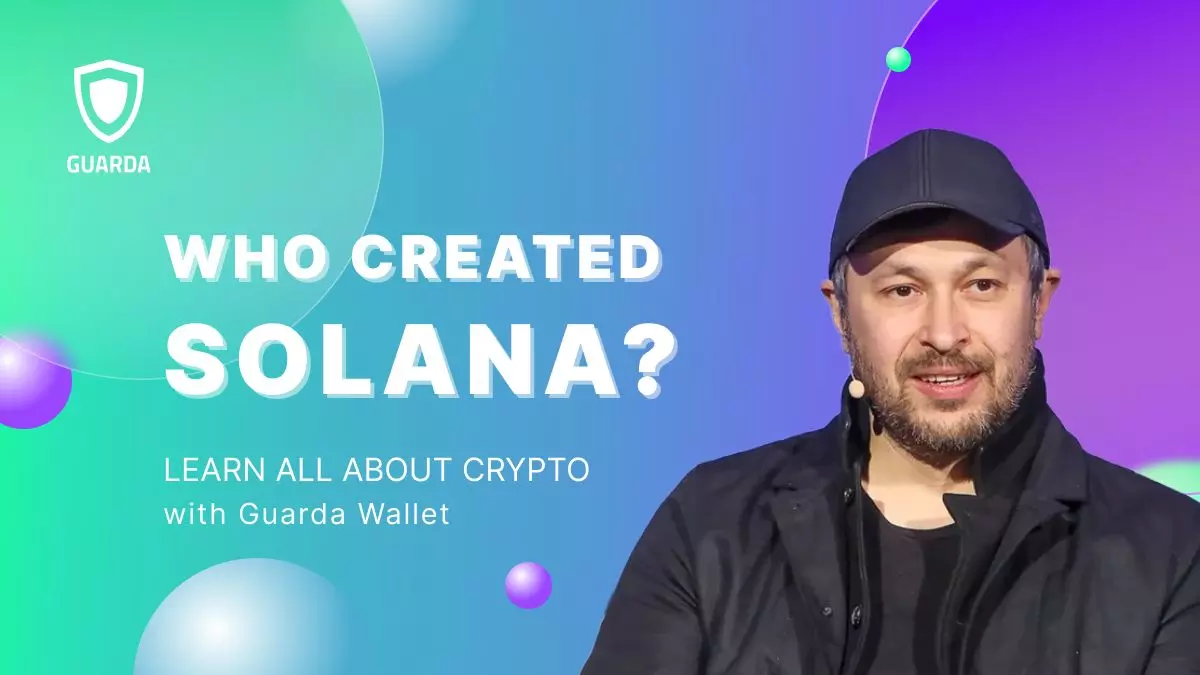
It all started with Anatoly Yakovenko, but Solana wasn’t built by Anatoly alone. He teamed up with a few other bright minds to turn his vision into reality.
Anatoly Yakovenko (Founder): A systems engineer with years of experience working on compression algorithms and distributed systems at Qualcomm. His background helped him create a system that could process huge numbers of transactions quickly and cheaply.
Greg Fitzgerald (Co-Founder & CTO): Greg worked with Anatoly at Qualcomm. He helped develop the first version of Solana’s software and played a critical role in shaping its architecture.
Stephen Akridge (Co-Founder): Also from Qualcomm, Stephen proposed offloading parts of the transaction signature verification process to graphics cards (GPUs), which was a game-changing idea.
Raj Gokal (Co-Founder & COO): A key driver of Solana’s business side, Raj helped shape the vision of Solana as more than just a technical project—it’s a platform for the future of finance, apps, and more.
Together, this team founded Solana Labs in 2018 and launched the Solana blockchain in March 2020.
Solana — story of creation
In 2017, Yakovenko had a breakthrough idea that would eventually reshape everything. After a couple of coffees and a beer, inspiration struck—he realized that a cryptographic clock could serve as the foundation for organizing events and transactions within a blockchain. This insight became the core of Solana’s consensus model, known as proof-of-history.
He soon brought on co-founders Greg Fitzgerald and Stephen Akridge, and together they began building what would become Solana—a high-speed blockchain designed to rival Ethereum. The project was initially named Loom, but due to an existing Ethereum-based project called Loom Network, they were forced to choose a new name.
Yakovenko and his team were regular surfers at Solana Beach, California. Taking a cue from companies that named themselves after places, they settled on “Solana.” “It just stuck,” Yakovenko recalled.
Even during the bearish crypto market of 2018–2019, the team managed to raise $20 million in early funding. And because they were developing during a quieter time in the industry, they could focus deeply on building a solid technical foundation without the distractions of excessive hype.
Why Their Vision Stood Out
So, what made Solana’s creation so important?
At the time, blockchains like Ethereum were struggling with congestion and high fees. Every time people tried to buy NFTs or use decentralized apps (dApps), the networks slowed down or became expensive.
Solana’s creators believed that blockchain could do better. They introduced a key innovation called Proof of History (PoH).
This is not a complicated concept. Imagine a clock that everyone on the network can trust. That’s what PoH is—a way for computers on the blockchain to agree on the time of events, which speeds up everything else.
By combining this idea with other techniques like Tower BFT (a decision-making system), Gulf Stream (a way to manage transactions more efficiently), and Turbine (a method of sending information in small pieces), Solana became incredibly fast and cost-effective.
In short:
- Speed: Handles up to 65,000 TPS
- Low Fees: Fractions of a cent per transaction
- Green: Uses significantly less energy than Bitcoin or Ethereum
How Solana Works with Guarda Wallet
If you’re using Guarda Wallet, you already know it supports a huge range of digital assets. The good news? Solana and SOL are fully supported, along with tools that make managing them easy and secure. You can:
- Buy SOL using your bank card or other crypto.
- Send and receive SOL in seconds with low fees.
- Swap SOL for other tokens using the built-in exchange—no need to leave the wallet.
With Guarda’s non-custodial setup, you control your keys, meaning your Solana stays in your hands—not on someone else’s server.
Why Solana Is Gaining Popularity
Solana is not just another crypto coin. It’s a full ecosystem powering some of the fastest-growing apps in decentralized finance (DeFi), gaming, NFTs, and Web3.
Here’s why users and developers are flocking to Solana:
Speed: Handles up to 65,000 transactions per second. Affordability: Typical fees are around $0.00025 per transaction. Scalability: Can grow with demand without slowing down. Vibrant Ecosystem: From NFT marketplaces to decentralized exchanges (DEXs) like DexScreener Solana, there are countless apps built on the platform.
Want to pay for something on DexScreener Solana? Just load your Guarda Wallet with SOL and you’re ready to go.
Solana’s Role in the Broader Crypto Market
It has quickly become one of the top cryptocurrencies by market capitalization. Whether you’re checking the Solana news, tracking how much is 1 Solana, or exploring how to buy Solana safely, the network’s transparency and growth make it a cornerstone of the blockchain space.
And with Guarda Wallet, you don’t have to be a tech wizard to get involved. Its intuitive design lets you access powerful blockchain tools without the learning curve.
Why Use Solana with Guarda Wallet?
Pairing Solana’s lightning-fast blockchain with Guarda Wallet’s trusted tools is a match made in crypto heaven:
- No Custodial Risks: Your keys, your crypto.
- Built-In Swaps: Exchange SOL for hundreds of other assets.
- Multi-Platform Access: Mobile, web, desktop.
- Gas-Free Transfers on Tron for USDT: Guarda even helps you save on non-Solana networks!


Final Thoughts
Solana is not just a buzzword—it’s an active, thriving ecosystem that’s already solving real-world problems in crypto. Whether you’re curious about what is Solana, checking the latest Solana news, or ready to buy your first SOL, Guarda Wallet gives you the tools you need to start smart, stay secure, and engage with one of the most exciting blockchain projects out there.
Sources: https://cointelegraph.com/learn/articles/anatoly-yakovenko ; https://www.investopedia.com/solana-5210472 ; https://solana.com/docs